
Skip to content
Rush Lake Improvement Association
  • Home
  • News and Events
  • About Us
    • Membership Form
    • Memoriam
  • About Rush Lake
  • Photo Gallery
  • Our Work
  • Contact
    • Contact Form
    • RLIA Board
    • Grant Funding Request
  • Classified Ads
    • Search Ads
    • Create New Ad
    • Manage My Ads
  • 0
  • Toggle website search
0 Menu Close
  • Home
  • News and Events
  • About Us
    • Membership Form
    • Memoriam
  • About Rush Lake
  • Photo Gallery
  • Our Work
  • Contact
    • Contact Form
    • RLIA Board
    • Grant Funding Request
  • Classified Ads
    • Search Ads
    • Create New Ad
    • Manage My Ads
  • 0
  • Toggle website search

News

  1. Home>
  2. News
Read more about the article Upcoming Chisago County Events

Upcoming Chisago County Events

  • Post author:rliawebmaster
  • Post published:August 5, 2025
  • Post category:News

Continue ReadingUpcoming Chisago County Events
Read more about the article Notice – Curly Leave Pondweed (CLP) and Invasive Milfoil Treatment

Notice – Curly Leave Pondweed (CLP) and Invasive Milfoil Treatment

  • Post author:rliawebmaster
  • Post published:April 18, 2025
  • Post category:News

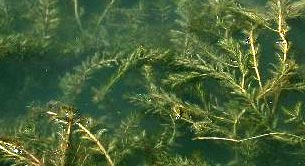
The Rush Lake Improvement Association has contracted to treat Curly Leaf Pondweed (CLP) and Invasive Milfoil two Aquatic Invasive Species in East and West Rush Lakes Chisago County in 2025.…

Continue ReadingNotice – Curly Leave Pondweed (CLP) and Invasive Milfoil Treatment
Read more about the article RCFD/RLIA Golf Tournament – Saturday, Sept 13th

RCFD/RLIA Golf Tournament – Saturday, Sept 13th

  • Post author:rliawebmaster
  • Post published:April 9, 2025
  • Post category:News

Continue ReadingRCFD/RLIA Golf Tournament – Saturday, Sept 13th
Read more about the article Rush Lake Eutrosorb Demonstration Project

Rush Lake Eutrosorb Demonstration Project

  • Post author:rliawebmaster
  • Post published:January 21, 2025
  • Post category:News/Project Updates

Continue ReadingRush Lake Eutrosorb Demonstration Project
Read more about the article RCFD/FLIA Golf Tournament – Saturday, Sept 21st

RCFD/FLIA Golf Tournament – Saturday, Sept 21st

  • Post author:rliawebmaster
  • Post published:August 12, 2024
  • Post category:News

Continue ReadingRCFD/FLIA Golf Tournament – Saturday, Sept 21st
  • 1
  • 2
  • 3
  • 4
  • …
  • 9
  • Go to the next page

Latest from Facebook

RUSH LAKE Improvement Association

1 week ago

RUSH LAKE Improvement Association
Request for Research Proposals:The Minnesota Aquatic Invasive Species Research Center (MAISRC) at the University of Minnesota is seeking proposals for research studies to advance early detection and prevention of the establishment aquatic invasive species (AIS), create and improve options for AIS control, and assess risk and species impacts to prioritize management actions in Minnesota.Through this competitive Request for Proposals (RFP), MAISRC will administer an estimated $2,300,000 to fund high-priority research needs focused on both new lines of research and continuation of existing projects. Anticipated funding availability is January 1, 2027 through December 31, 2028. There is no budget limit for each proposal or a set number of proposals that will be funded. Proposals are invited from investigators at any Minnesota-based academic, governmental (federal, tribal, state, local), or non-profit research institution or organization with demonstrated capacity to conduct rigorous scientific research. Proposed work should build capacity within and benefit the state of Minnesota. Multi-disciplinary and multi-investigator projects bringing together diverse skillsets are strongly encouraged. Research teams may include expertise from outside of Minnesota, but please note that some restrictions apply to out-of-state spending of grant funds. The deadline for pre-proposals is March 2, 2026 at 11:59 PM CST. All documents must be submitted to maisrc@umn.edu. For questions about research priorities or to discuss research ideas, contact MAISRC staff.Click the button below to visit the website for the full announcement and application materials. REQUEST FOR PROPOSALSApply to the new MAISRC Externship Program: MAISRC is launching a new Externship Program in 2026 to support applied research capacity for AIS management in Minnesota. This pilot program will support AIS professionals to partner with MAISRC-affiliated researchers to conduct solutions-oriented, locally relevant research with potential statewide benefits. The program is designed to address high-priority AIS research needs while supporting the professional development of resource managers and decision-makers.Externships may last up to one year and include budgets of up to $30,000. MAISRC will fund a portion of the extern’s salary and associated fringe benefits to allow dedicated time for new AIS research while externs remain in their current roles. The program will also cover direct project costs such as supplies, laboratory services, and research travel. Projects must represent new research efforts rather than extensions of existing organizational work and will be co-developed and implemented with MAISRC researchers to ensure scientific rigor and management relevance.The program is open to early- to mid-career AIS professionals from state, tribal, local, nonprofit, and private-sector organizations working in Minnesota. Projects must focus on one or more MAISRC priority species and address early detection and prevention, control options, or impacts that inform management decisions. To learn more about the Externship Program and apply, visit z.umn.edu/m-externship or click the button below: APPLY TO EXTERNSHIP Upcoming EventsJanuary 28, 2026: AIS Detectors webinar: The FAQs of eDNA, presented by UMN eDNA panellFebruary 17–19, 2026: Invasive Species Forum, hosted by the Invasive Species CentreMarch 4, 2026: MAISRC Containment Lab free guided group tour: RegisterMay 6, 2026: AIS Detectors webinar: Genetic options for controlling invasive carp species, presented by: Michael SmanskiJuly 8, 2026: AIS Detectors webinar: Genomic surveillance of zebra mussel populations using genotyping by sequencing, presented by Daryl GohlIn the NewsNew Genomic Study Reveals Hidden Pathways Driving Minnesota’s Zebra Mussel Spread, Daryl Gohl and Michael McCartney interviewed, (UMN News)Frog patrol: How scientists, students, and community members are guarding Minnesota's wetlands from disease, Amy Kinsley interviewed, (UMN Vet Med)University of Minnesota survey finds Minnesotans concerned about health of lakes, rivers, Nick Phelps and Gretchen Hansen interviewed, (MPR News)Invasive rusty crayfish trapping offers lake benefits, and a tasty meal, Valerie Brady interviewed, (Outdoor News)Minnesotans' water worries run deep, see science as a solution, Nick Phelps and Gretchen Hansen interviewed, (UMN News)Tag, bait, scoop: Researchers explore new ways to rid Minnesota lakes of pesky common carp, Sarah Unruh, Solomon David, Przemek Bajer interviewed, (MPR News)Facebook logo Youtube logo Instagram logo BlueSky logoFunding for the Minnesota Aquatic Invasive Species Research Center (MAISRC) is provided by the Minnesota Environment and Natural Resources Trust Fund as recommended by the Legislative-Citizen Commission on Minnesota Resources (LCCMR), the State of Minnesota, and public donations.Did someone forward you this email? You can sign up for our mailing list at z.umn.edu/MAISRCconnectCopyright © 2026 Regents of the University of Minnesota, All rights reserved.The University of Minnesota is an equal opportunity educator and employer.This message was sent from:Minnesota Aquatic Invasive Species Research Center2003 Upper Buford CircleSt. Paul, MN, 55108USA ... See MoreSee Less
View on Facebook
· Share

Share on Facebook Share on Twitter Share on Linked In Share by Email

RUSH LAKE Improvement Association

1 month ago

RUSH LAKE Improvement Association
Thank you The Grumpy Minnow staff for doing the annual RLIA members breakfast. Great food, prizes and friends. Reminder membership dues be in by end of January. Want to join check the website. Have a great Holiday season ... See MoreSee Less

Photo

View on Facebook
· Share

Share on Facebook Share on Twitter Share on Linked In Share by Email

RUSH LAKE Improvement Association

2 months ago

RUSH LAKE Improvement Association
Parents, guardians urged to prioritize kids’ safety around cold water:As temperatures fall and ice begins forming on ponds, small lakes, and other waterways across the state, the Minnesota Department of Natural Resources reminds parents and guardians to talk with their kids about the importance of safety on the ice and around the water. It’s especially important with many children at home over Thanksgiving break.Falling into the water this time of year, whether through thin ice or into open water, can turn tragic quickly. It has the potential to incapacitate even the strongest swimmers, so it’s up to parents and guardians to teach their kids about the dangers of cold water, and ensure they’re properly supervised anytime they’re around water. Already this season, a DNR conservation officer and other rescue personnel saved two teenagers who fell through thin ice in northern Minnesota.“Kids tend to be curious about the water, but they might not understand the dangers,” said Capt. Adam Block, boating law administrator for the DNR. “Every type of waterway can be dangerous this time of year, from small neighborhood ponds all the way to our largest lakes and rivers.”Wearing a foam-filled life jacket is the best way to stay safe around cold water or survive an unexpected fall in. Foam is better than inflatable life jackets this time of year, since the latter might not fully inflate in cold water. In addition, Block recommends people carry a phone in case they need to call for help, let others know where they’re going and when they plan to return, and plan for how to deal with an unforeseen incident.For more information about surviving a fall into cold water, visit the DNR cold water dangers webpage (mndnr.gov/safety/boatwater/cold-water.html). Be safe! ... See MoreSee Less

Cold water dangers

mndnr.gov

Boat and water safety - cold water dangers and tips for survival.
View on Facebook
· Share

Share on Facebook Share on Twitter Share on Linked In Share by Email

RUSH LAKE Improvement Association

2 months ago

RUSH LAKE Improvement Association
Give the gift of the outdoors this holiday seasonThe Minnesota Department of Natural Resources has a variety of budget-friendly holiday gift options for outdoor enthusiasts of all ages, abilities and interests. These gifts include subscriptions to the Minnesota Conservation Volunteer, gift cards, Nature Store items, and lifetime hunting and fishing licenses.Minnesota Conservation VolunteerMCV magazine is a bi-monthly publication packed with beautiful photography and compelling stories about Minnesota’s outdoors. A subscription is the ideal gift for nature lovers. Recipients receive a one-year subscription to the magazine and a card announcing the gift. Purchasers can contribute any amount to gift an annual subscription. The suggested donation for an annual subscription is $25. Gift subscriptions can be purchased on the MCV gift page of the DNR website (cambeywest.com/MCV/?f=gift&s-V1711DNRGG).Minnesota state parks gift cardState parks gift cards can be used for camping and lodging, state park vehicle permits, Nature Stores purchases, firewood, equipment rentals, tours, I Can! programs, and more. E-gift cards are delivered to the purchaser immediately and can be shared with the recipient when the time is right. Physical gift cards are sent via US Postal Service mail and take 10-14 days to arrive. Gift cards can be purchased on the state parks gift card page of the DNR website (mndnr.gov/state_parks/gift_card.html).Lifetime hunting and fishing licensesGive a gift with lasting impact: a lifetime hunting or fishing license! The DNR offers reduced rates on lifetime licenses for those under age 16 and over 50. Plus, if license prices increase, lifetime licenses remain valid. More information is available on the Minnesota DNR webpage for Minnesota residents’ licenses (mndnr.gov/licenses/lifetime/residents) and nonresidents’ licenses (mndnr.gov/licenses/lifetime/nonresidents).Licenses can be ordered by calling the DNR License Center at 877-348-0498 to receive ... See MoreSee Less

Minnesota Conservation Volunteer

cambeywest.com

Minnesota Conservation Volunteer is a publication of the Department of Natural Resources, a state government agency, which means your name and address is considered public information. Unless you spec...
View on Facebook
· Share

Share on Facebook Share on Twitter Share on Linked In Share by Email

RUSH LAKE Improvement Association

3 months ago

RUSH LAKE Improvement Association
Minnesota DNR seeks tree seed, cone collectors to help grow future forests!Black spruce cone collection:The Minnesota Department of Natural Resources is seeking individuals to collect tree seeds and cones this fall and winter. Seeds and cones are essential for growing the tree seedlings at the State Forest Nursery that are used to reforest thousands of acres across Minnesota each year.“Each bushel of seed or cones collected helps grow the next generation of Minnesota’s forests,” said Nicole Schafer, DNR seed and cone consultant. “We count on local seed sources and dedicated collectors to keep our reforestation efforts strong.”The DNR pays for high-quality cones collected from native tree species. Collectors should call their local DNR Forestry office before collecting to confirm which species are needed and to arrange drop-off. Seeds and cones from single yard trees are not recommended. Many yard trees could be cultivars or nonnative varieties, and collecting from just one tree limits genetic diversity.Current high-demand species and payments:Jack pine, $60 per bushel for closed, ripe cones: Collection period Sept. 5–March 1.Black spruce, $200 per bushel for closed, ripe cones: Collection period Sept. 15–March Red pine, $80 per bushel for closed, ripe cones: Peak collection period was in mid-September but there might be some northern pockets with closed cones still available.The DNR is currently at capacity for acorns and black walnuts and is not accepting additional quantities of those species this fall and winter.Cones must be ripe, closed, and free of stems, leaves, and debris. Store collected cones in a cool, dry area and deliver them to a Forestry Office drop-off location as soon as possible to maintain seed quality. Collectors can find additional information about other species, current prices, and collection tips on the DNR’s seed and cone collection webpage (mndnr.gov/seedcone). ... See MoreSee Less
View on Facebook
· Share

Share on Facebook Share on Twitter Share on Linked In Share by Email

Copyright 2019 - Rush Lake Improvement Association (RLIA)
error: Content is protected
×
×

Cart